
Ethernet Cabling for Offices in Manchester: Costs and Guide
Let’s be real. If your office WiFi drops every time someone starts a Teams call, your network is not fine. It is barely coping.
Manchester offices are upgrading because cloud apps, VoIP phones, and 4K video meetings are not slowing down. Your old Cat5e cabling probably is.
At iSecurity Solutions, we design and install structured cabling that works in the real world. Not just on paper. If you are planning an office network upgrade in Manchester, this guide explains what you need, what it costs, and how to avoid expensive mistakes.
Ethernet Cabling For Offices In Manchester Explained
Here’s what’s actually happening. Businesses are finally realising WiFi is not magic. It relies on solid wired infrastructure behind the scenes. That means proper Cat6 or Cat6a structured cabling installed and tested correctly.
When we carry out Ethernet network installation services, every cable is tested with Fluke Certified equipment. Not guessed. Not assumed. Installed to the standard and proven with results. We follow BICSI aligned design practices, complete Fluke Certified testing, and provide as built drawings at handover. No shortcuts.
Manchester Office Ethernet Cabling Costs And Cat6 Guide
Obviously, business demands have changed. Five years ago, 1Gbps felt generous. Now you have cloud backups running, CCTV on the network, access control panels, IP phones, and half the team on HD calls.
Cat5e handles 1Gbps up to 100 metres. Fine, until it is not. Cat6 supports higher bandwidth and can handle 10Gbps over shorter runs. According to Category 6 cable specifications, Cat6 operates at 250 MHz and offers better protection against interference.
Cut the nonsense. If you are refitting an office in Spinningfields or Salford Quays and still choosing Cat5e to save a small amount per point, you are thinking short term. Most Manchester offices now install Cat6 as the minimum. Still fitting Cat5e in 2026? Fine. Just do not complain when you are replacing it in three years.

Cat5e Vs Cat6 Vs Cat6a In A UK Office
Stop pretending they are the same. They are not.
- Cat5e supports up to 1Gbps
- Cat6 supports higher bandwidth and limited 10Gbps runs
- Cat6a supports full 10Gbps up to 100 metres
- Cat6 and Cat6a offer better noise control
- Improved Power over Ethernet support
- More headroom for future growth
Cat5e is common in older Manchester buildings. It handles 1Gbps well. For small offices with light usage, it works. But there is little room to grow.
Cat6 is the sweet spot. It supports 10Gbps up to around 55 metres and 1Gbps up to 100 metres. For most office floors, that is more than enough.
Cat6a supports 10Gbps up to 100 metres. It is thicker and slightly more expensive. It suits high density environments or where 10Gb switching is planned.
Here is the rule. If you are staying in the building for five to ten years, install Cat6 at minimum. If you run heavy data, media production, or large uplinks between cabinets, consider Cat6a.
What Is Structured Cabling And How It Works In UK Offices
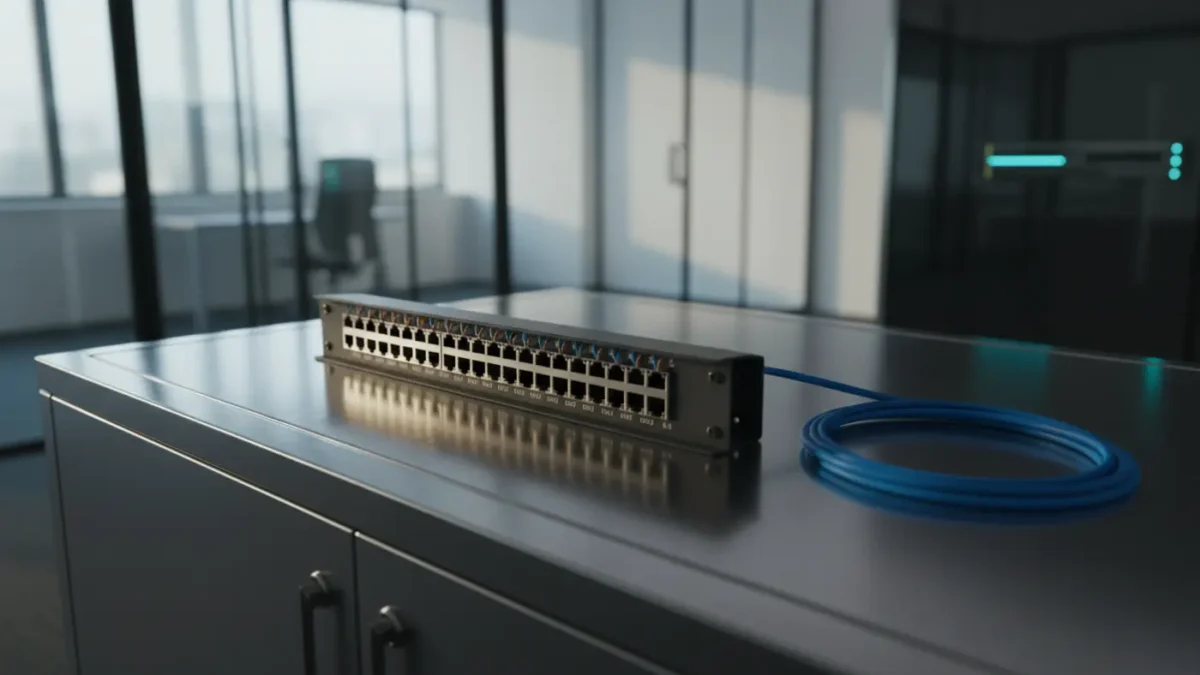
Structured cabling is not a random bundle of cables in the ceiling. It is a planned system. Every outlet runs back to a central patch panel. That panel connects to switches in a cabinet or server room.
It follows standards such as BS EN 50173 for performance and BS EN 50174 for installation practice. Install to the standard. Not roughly. Not close enough. To the actual requirement. That means correct separation from power cables, proper containment, safe routing, and full certification.
At handover, you should receive Fluke test results and labelled as built drawings. If you do not, ask why.
UK Standards And Compliance For Office Ethernet Cabling
Here is what good looks like in the UK.
Installations should comply with BS EN 50173 for system design and performance. BS EN 50174 covers how cabling must be installed inside buildings. Electrical coordination should align with BS 7671 wiring regulations.
We follow BICSI aligned design practices and provide Fluke Certified test results. Every data point is verified for performance. Not just plugged in and hoped for.
When cabling supports systems like IP CCTV installations or access control systems, performance matters even more. Dropped packets mean lost footage or door faults. Come on. That is not acceptable.
Planning A Structured Cabling Layout For Manchester Office Spaces
Here is what actually works.
Start with headcount. Then add growth. If you have 40 desks, do not install 40 data points. Install at least 60. Leave spare capacity in patch panels and cabinets.
Meeting rooms need multiple points. One for the screen. One for the conferencing unit. One spare. WiFi access points need dedicated data runs. Printers and security devices need their own connections.
If you are also installing systems like intruder alarms for offices in Manchester built to EN 50131 standards, proper segregation and reliable infrastructure are critical, especially with remote monitoring and Police Response URN requirements through SSAIB and Insurance Approved systems.
Patch Panels Server Rooms And Cabinet Setup
A patch panel is the organised end of your fixed cables. It sits in a rack. Each port is labelled. Each cable is terminated neatly.
Switches connect to the patch panel using short patch leads. This keeps everything tidy. When someone moves desks, you repatch at the cabinet. You do not pull new cable.
Good cabinet setup includes ventilation, cable management, UPS protection, clear labelling, and spare capacity.
If your cabinet looks like spaghetti junction, it is time to sort it out.
How Long Does Ethernet Cabling Installation Take In A Manchester Office
Straight up, it depends on size and access.
A small office with 15 to 20 data points can often be completed in one to two days, including termination and Fluke testing.
A medium office with 60 to 100 points may take several days, especially if work is carried out around staff. Out of hours work adds time and cost but reduces disruption.
The process is simple. Survey. Cable installation. Termination. Testing. Certification. Handover with documentation.
Cost Breakdown For Cat6 Structured Cabling Installation In Manchester
Let’s talk money.
Across the UK, most Cat6 projects fall between £40 and £100 per single data point, depending on complexity and access. Double data points cost more due to extra materials and labour.
In Manchester offices, real costs depend on ceiling type, floor access, working hours, and cabinet requirements.
A 25 person office with 50 Cat6 data points may range from £3000 to £6000 as a broad guide. Larger multi floor offices scale up from there.
Cat6a adds a premium because the cable is thicker and takes longer to install. If you are planning for 10Gb switching, the extra cost can make sense.
Do not just compare headline prices. Ask if Fluke testing is included. Ask for as built drawings. Ask about compliance with BS EN 50173. Cheap quotes often skip the important parts.
Choosing A Qualified Network Cabling Contractor In Manchester
Look for BICSI aligned design knowledge. Ask if they use Fluke Certified testing equipment. Request sample test reports.
Check they understand integration with other systems. If you are running networked security cameras or access control, Power over Ethernet and bandwidth planning must be factored in from day one.
Also consider long term support. A structured cabling system should last 10 to 15 years. Working with a provider who offers security maintenance contracts in Manchester alongside network support gives you continuity and accountability.
iSecurity Solutions is a trusted UK provider of commercial and domestic security systems. We help homes and businesses stay protected around the clock. From CCTV and intruder alarms to fire safety, access control, and construction site monitoring, our expert team designs reliable and tailored solutions. All systems are backed by responsive service and modern remotely monitored technology. Whether you are securing one office or managing multiple sites, we deliver the equipment, expertise, and peace of mind to keep what matters most safe.